What Does a Non-Stock Order Really Cost a Distributor?
Non-stock items can take 30 to 45 minutes of phone calls per line. Here is what specials really cost, how to track them, and how to source them faster.


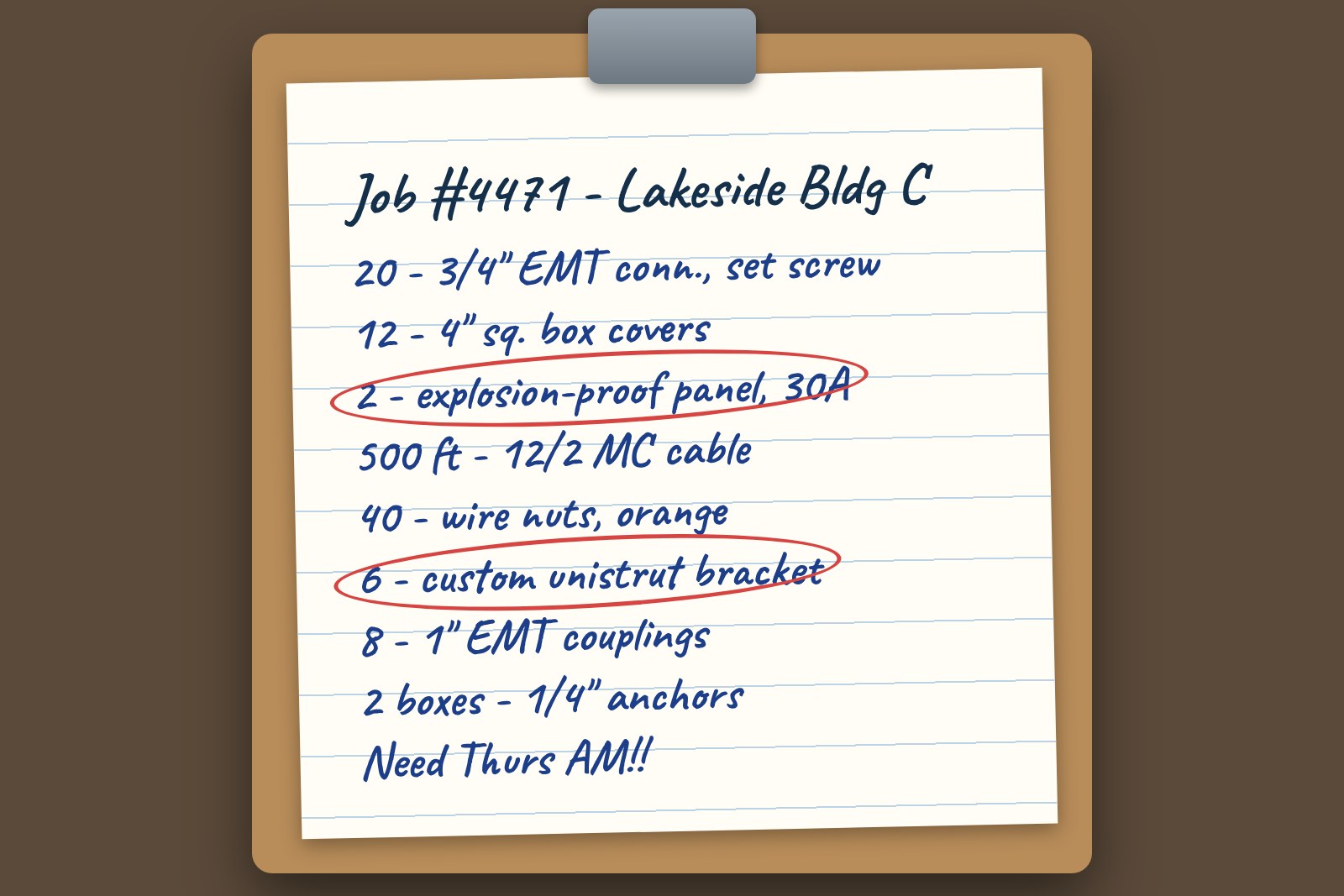
Table of contents
OptionShort answer: A single non-stock line can easily take 30 to 45 minutes of a rep's time, spread across supplier calls, price checks, a PO and follow-up. Because that time is so expensive, many distributors quote specials slowly or turn them away, and the customer takes the whole order somewhere else.
Specials are one of the biggest revenue leaks in distribution, and one of the least measured. Here is how the process usually works, what it really costs and what you can do about it starting this week.
How does a non-stock order work at most distributors?
The customer asks for an item you don't carry. Then the rep goes to work.
- Figure out exactly what the item is. Often the customer gave a description, not a part number.
- Decide which suppliers might carry it.
- Call or email supplier one. Wait.
- Call or email supplier two. Get a price, but it may be out of date.
- Call or email supplier three. Better price, longer lead time.
- Pick a supplier, set a sell price and quote the customer.
- When the customer says yes, key a purchase order and a sales order.
- Set a reminder to confirm the ship date.
On a good day that takes 30 minutes. On a busy day the request sits in an inbox until tomorrow.
What does that cost?
Here is an illustrative calculation. Use your own numbers.
- Non-stock requests per day: 40
- Minutes per request: 35
- Rep hours per day on specials: about 23
- Loaded cost per rep hour: $40
- Daily cost: about $930
- Annual cost (250 days): about $233,000
That is just the time. The bigger cost is the orders you lose. When a contractor asks for 20 items and you can quote 18 today and 2 next week, many will send the whole order to whoever can quote all 20 now.
Why do distributors stop chasing specials?
Because the math feels bad on a single line. Thirty-five minutes to earn margin on an $80 item doesn't look worth it. So teams build quiet rules. "We don't do specials under $100." "Tell them we'll get back to them."
The problem is that the special is rarely alone. It is usually attached to an order you want, from a customer you want to keep.
What can you do this week without new software?
Start with visibility.
- Count them. For two weeks, have reps log every non-stock request and whether it was quoted.
- Build a go-to supplier sheet. For each category, list the first supplier to try, their contact and their typical lead time.
- Set a clear rule. Decide when a special is worth chasing based on the customer and the order it is attached to, not the single line.
- Batch supplier requests. One email with five items beats five phone calls.
- Track the win rate on quoted specials. It is usually higher than people expect.
These steps will make specials more visible and more consistent. They won't make them fast.
Where does DIY stop working?
Speed. Your rep still has to know which supplier to check, still has to wait for answers and still has to key the PO. When volume climbs, specials go back to the bottom of the pile.
That is the gap automated non-stock sourcing fills. The system identifies the item, checks supplier portals, catalogs and price files for availability and price, picks the best option within your rules and starts the purchase order without a rep picking up the phone. The distributors we work with have cut supplier sourcing time by 87%.
Which industries feel this the most?
Every distributor deals with specials, but some live on them.
- Specialty tools and fasteners. Anchors, bits and fasteners in endless sizes and finishes.
- Industrial MRO and integrated supply. Long-tail parts for plant equipment, often requested by description only.
- Electrical. Project-specific fixtures, gear and controls.
- Plumbing and HVAC. Replacement parts for older equipment.
Frequently asked questions
What is a non-stock item in distribution?
It is any item a distributor sells but doesn't keep in inventory. It is sourced from a supplier when a customer orders it, sometimes shipped direct to the customer.
Should a distributor drop ship non-stock items?
Often, yes, when the supplier can ship directly and the customer doesn't need it combined with stocked items. The right answer depends on freight, timing and whether the customer wants one delivery.
How do I price special orders?
Most distributors set a target margin by category and customer tier, then adjust for freight and urgency. The key is consistency, so two reps don't quote the same special at two different prices.
Can non-stock sourcing be automated?
Yes. Systems can check supplier portals, price files and catalogs, choose the best option within your rules and create the PO. Ask any vendor to demo it on an item you actually don't carry.
How do I know if specials are hurting my business?
Track how many non-stock requests you get, how many you quote, how fast you quote them and how often the whole order is lost. Most distributors are surprised by the numbers.
Mike Mayer is CMO of Revalgo and has spent 23 years running digital and order-desk strategy for manufacturers and distributors.
Related reading: What Should AI Order Entry Actually Do for a Distributor? and Why Do Order Automation Projects Fail at Distributors?